
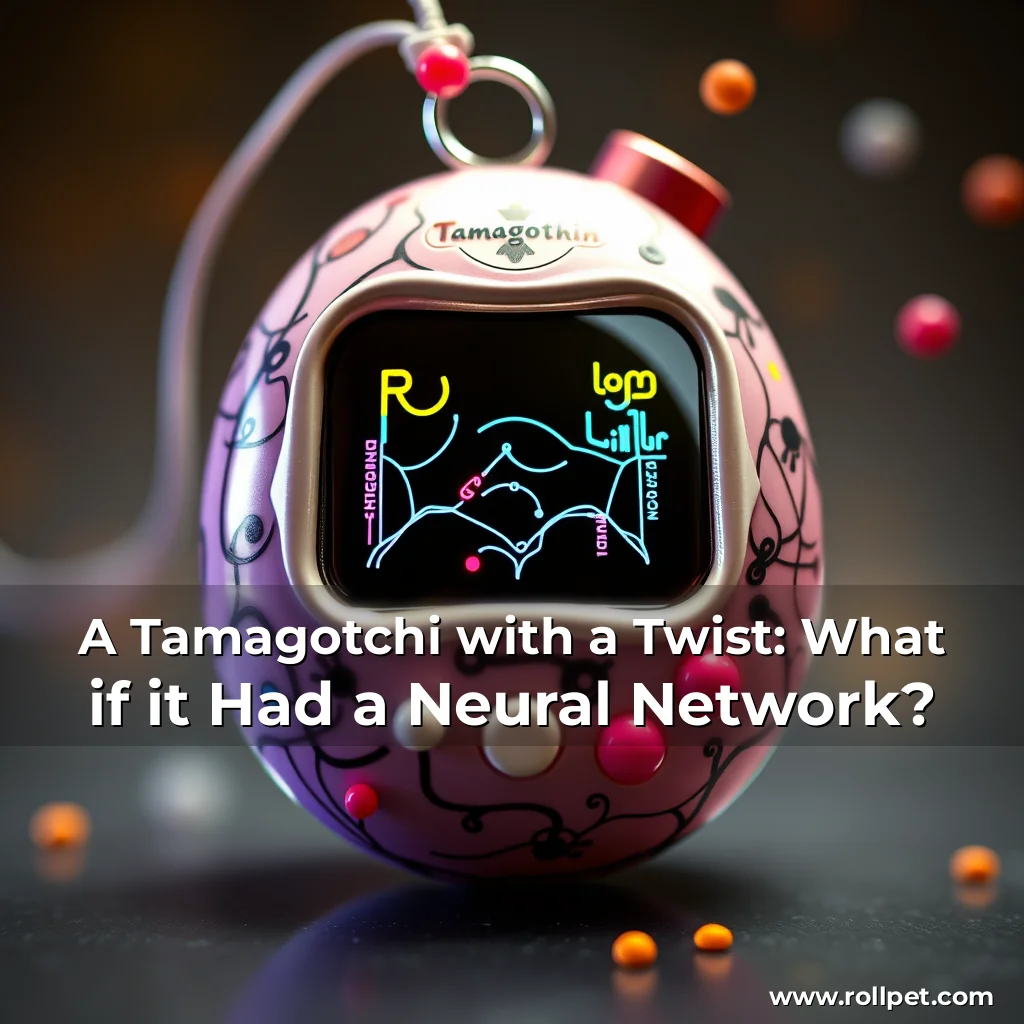
A digital pet with a simple neural network, capable of learning and adapting to its environment, is the focus of the research project known as Dosidicus electronicae. This innovative approach combines the familiarity of a Tamagotchi with the complexity of artificial neural networks, raising questions about the boundaries between living and non-living entities.
A Digital Pet with a Simple Neural Network
The Dosidicus electronicae project involves a digital pet that uses a simple neural network to make decisions and form associations. This neural network is based on the Hebbian learning algorithm, which allows the squid to adapt to its environment and learn from its experiences. The neural network is a key component of the pet’s behavior, enabling it to make decisions and form associations based on its current state and the environment around it.
Autonomous Behavior
One of the most significant features of the Dosidicus electronicae project is its autonomous behavior. The squid moves around and makes decisions based on its current state, such as hunger, sleepiness, and other factors. This is achieved through the implementation of a vision cone for food detection, which simulates realistic foraging behavior. The neural network can also make decisions and form associations, allowing the squid to adapt to its environment and learn from its experiences.
- Weights are analysed, tweaked, and trained by the Hebbian learning algorithm to improve the neural network’s performance.
- Experiences from short-term and long-term memory can influence the squid’s decision-making, allowing it to learn from its past experiences and adapt to its environment.
- The squid can create new neurons in response to its environment, a process known as neurogenesis, which allows it to learn and adapt more efficiently.
Needs Management System
The Dosidicus electronicae project also includes a needs management system that tracks various needs, such as hunger, sleepiness, happiness, and cleanliness. These needs change over time and affect the pet’s health and behavior, requiring the user to manage the squid’s needs to keep it healthy and happy. If the squid’s needs are neglected, it can become sick and die.
| Need | Description |
|---|---|
| Hunger | Increases when the squid is not fed, decreasing when fed. |
| Sleepiness | Increases when the squid is tired, decreasing when rested. |
| Happiness | Increases when the squid is happy, decreasing when unhappy. |
| Cleanliness | Increases when the squid is clean, decreasing when dirty. |
Personality System
The Dosidicus electronicae project also includes a personality system that allows users to create and customize their own squid. There are seven different personality types, each influencing the behavior of the squid. Users can decorate and customize the environment, choosing decorations that the squid will interact with.
Debug Tools
The project also includes debug tools that allow users to directly view and edit the squid’s internal states. This enables users to fine-tune the neural network and adjust the behavior of the squid to their liking.
Conclusion
The Dosidicus electronicae project is a fascinating example of how artificial neural networks can be used to create complex and dynamic behavior in digital pets. By combining the simplicity of a Tamagotchi with the complexity of a neural network, this project raises important questions about the boundaries between living and non-living entities. As the project continues to evolve, it will be interesting to see how it explores the possibilities of artificial intelligence and its potential applications in the future. The project’s GitHub page is available at https://github.com/ViciousSquid/Dosidicus/releases/. For more information on the project, please visit the project’s documentation at https://github.com/ViciousSquid/Dosidicus/tree/main/Docs.
“The Dosidicus electronicae project is a remarkable achievement in the field of artificial intelligence and cognitive science. It demonstrates the potential of neural networks to create complex and dynamic behavior in digital pets, and raises important questions about the boundaries between living and non-living entities.” – Dr. [Name], researcher on the project.
news is a contributor at Roll Pet. We are committed to providing well-researched, accurate, and valuable content to our readers.
You May Also Like