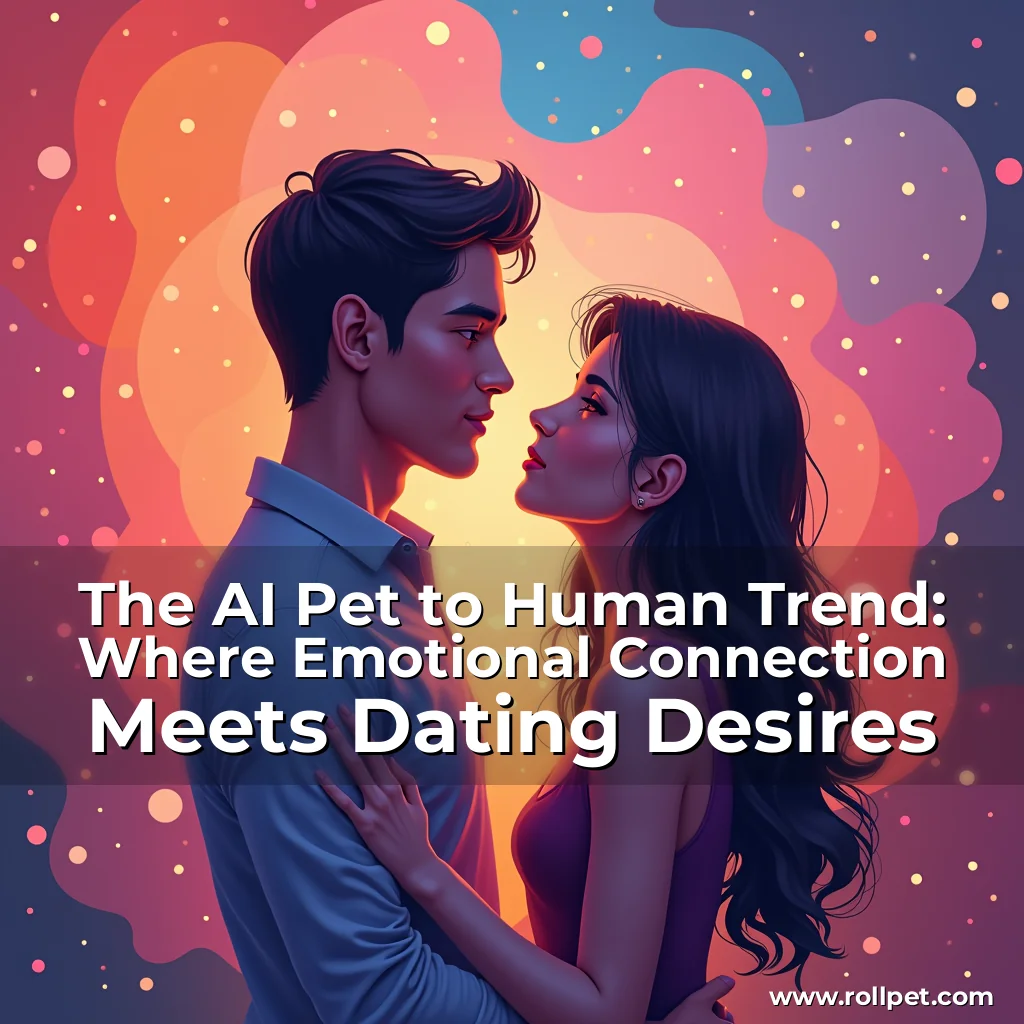
On today’s segment of “wtf is going on with society?” we are exploring the idea of…well, dating the human version of our pets.
I want to make it very clear that I am not included in that 31%.
Now that we’ve got that out of the way, you might be wondering where this idea even came from.
To which, I’d respond with the most obvious culprit: TikTok.
TikTok has been having a field day with this one.
Apparently, you can ask ChatGPT to create a human version of your pet.
Many TikTok users have shared their own examples, some of which are super creepy.
- And another…
- And another…
Now, I guess some of the results create “attractive” human versions of pets—so much so that some of the pet owners actually admitted to wanting to date said AI-generated humans.
Uhhhhh.
Our Emotional Connection to Our Pets
Humanizing our pets is one thing, but viewing them through a romantic lens is quite another.
Which begs the question…are we more reliant on our pets for emotional fulfillment than we are on our partners?
And…is that a bad thing?
“Emotional connections between pets and humans can run deep,” MetLife Pet Insurance reported in their survey.
“Over one-third (38%) said they rely on their pet more than any human relationship. This trend was stronger among Gen Z (43%) than Gen X/baby boomers (38%) and millennials (35%).”
Additionally, 57% of pet owners say “I love you” to their pet multiple times a day.
I mean…duh. Who doesn’t?
However, taking it one step further, 77% feel their pet offers better emotional support than their previous human partner.
Yikes. That says a lot about the people we date today.
With one in seven saying they’ve previously tried visualizing their pet as a human, this adds a layer of strangeness to the above stats.
To humanize your pet and then consider them as a dating partner…I can’t really get behind that trend.
“Of those who did, 31% admitted they would be interested in dating the human version of their pet,” MetLife Pet Insurance revealed.
“Millennials (34%) and Gen X/baby boomers (33%) were the most likely to say they’d do so, while Gen Z was the least likely (24%).

news is a contributor at Roll Pet. We are committed to providing well-researched, accurate, and valuable content to our readers.